

Recommendations
-
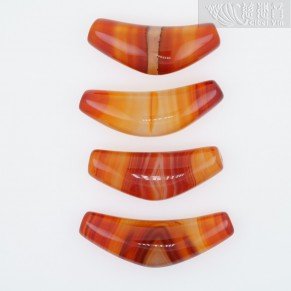
Horn-Shaped Dzi Bead (Natural Red Sardonyx) - A1
These sardonyx beads are natural minerals. The colors and patterns vary. Each one of them is second to none. Only place an order if you truly acknowledge and accept such differences.
Size: W40~55 xH15 xD12 mm(±5%)
Material: Sardonyx
【Live excerpt Stories of Reincarnation 】
Learn MoreUS $580 -
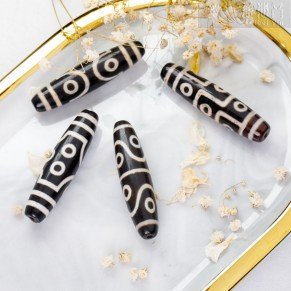
Agate Dzi Bead 57mm
Dzi Beads are the treasures from heaven, containing Universal spiritual essence and magnetic energy.
Size: 5.7x1.39x1.42 cm(±5%)
Learn More -
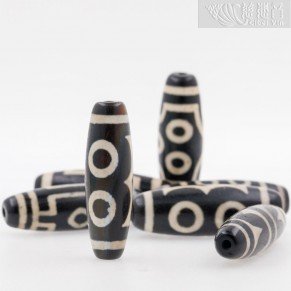
Agate Dzi Bead 42mm
Dzi Beads are the treasures from heaven, containing Universal spiritual essence and magnetic energy.
Unique, precious and rare!
Size: 4.2x1.35x1.35 cm(±5%)
Learn More -
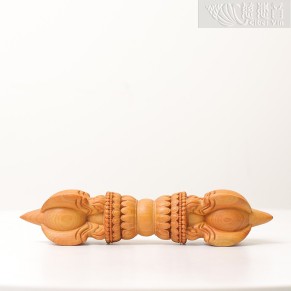
Wooden Vajra (14 cm)
The Vajra is a sacred implement for subduing negative forces, dispelling disasters, and warding off evil. It symbolizes unwavering determination and the power to break through obstacles, supporting the practitioner in becoming stronger, more resolute, and overcoming all challenges on the path of cultivation.**
**This Vajra is intricately carved from rare *Ya Bai* wood (cliff cypress), known for its dense, fine texture, natural grain, and lasting fragrance. Compassionately blessed by Grandmaster JinBodhi, may those who are destined to receive it be empowered by the boundless wisdom of the Five Dhyani Buddhas, be free from calamities and harm, overcome delusions, and enjoy peace, protection, and auspiciousness
Material: Wooden
Size:14 cm (±3%)
Learn MoreUS $88 -
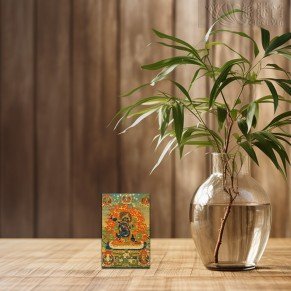
Mahakala Deity Thangka - Wallet Size
Bestows health and wealth, wards off misfortune and evil. Bring protection everywhere.
Mahakala Deity is the god of the void, symbolizing the boundless and infinite universe, dispelling all darkness and demons. He is a central Dharma guardian of Tantric Buddhism, as well as the god of healing and the god of wealth. Mahakala Deity's vastness and power surpasses the six cycles of reincarnation; he can help sincere disciples to quickly and effectively cut off greed, anger, ignorance, arrogance, and doubt.
Wrathful manifestations of Buddhas and Bodhisattvas, such as Mahakala Deity, have powerful energy to avoid evil, eliminate disasters, and dispel evil spirits. Offering to Mahakala can help us develop a fearless mind, increase energy and courage, and calmly face the ups and downs of life; Mahakala can also help us quickly break through obstacles in life, career, health, and practice. May you be blessed with wisdom, great wealth, courage, diligence, achieve greatness, and quickly reach the other shore of enlightenment."Material: PVC laminated card
Dimensions (W * H): 5.5x8.5cm(±3%)
Minimum purchase of 10 pieces
【Live excerpt Who's Plaguing You?】
Learn MoreUS $2 -
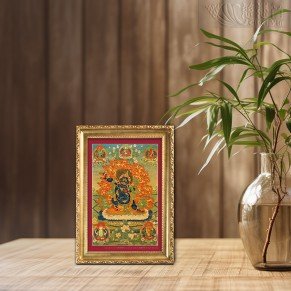
Mahakala Deity Thangka - 4x6"
Bestows health and wealth, wards off misfortune and evil. Bring protection everywhere.
Mahakala Deity is the god of the void, symbolizing the boundless and infinite universe, dispelling all darkness and demons. He is a central Dharma guardian of Tantric Buddhism, as well as the god of healing and the god of wealth. Mahakala Deity's vastness and power surpasses the six cycles of reincarnation; he can help sincere disciples to quickly and effectively cut off greed, anger, ignorance, arrogance, and doubt.
Wrathful manifestations of Buddhas and Bodhisattvas, such as Mahakala Deity, have powerful energy to avoid evil, eliminate disasters, and dispel evil spirits. Offering to Mahakala can help us develop a fearless mind, increase energy and courage, and calmly face the ups and downs of life; Mahakala can also help us quickly break through obstacles in life, career, health, and practice. May you be blessed with wisdom, great wealth, courage, diligence, achieve greatness, and quickly reach the other shore of enlightenment."Material: PVC laminated card
Dimensions (W * H): 9.7x15cm(±3%)
Minimum purchase of 6 pieces
【Live excerpt Who's Plaguing You?】
Learn MoreUS $3 -
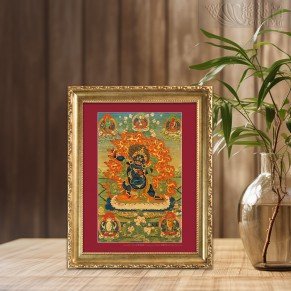
Mahakala Deity Thangka - 6x8"
Bestows health and wealth, wards off misfortune and evil. Bring protection everywhere.
Mahakala Deity is the god of the void, symbolizing the boundless and infinite universe, dispelling all darkness and demons. He is a central Dharma guardian of Tantric Buddhism, as well as the god of healing and the god of wealth. Mahakala Deity's vastness and power surpasses the six cycles of reincarnation; he can help sincere disciples to quickly and effectively cut off greed, anger, ignorance, arrogance, and doubt.
Wrathful manifestations of Buddhas and Bodhisattvas, such as Mahakala Deity, have powerful energy to avoid evil, eliminate disasters, and dispel evil spirits. Offering to Mahakala can help us develop a fearless mind, increase energy and courage, and calmly face the ups and downs of life; Mahakala can also help us quickly break through obstacles in life, career, health, and practice. May you be blessed with wisdom, great wealth, courage, diligence, achieve greatness, and quickly reach the other shore of enlightenment."Material: PVC laminated card
Dimensions (W * H): 15x19.7cm(±3%)
Minimum purchase of 3 pieces
【Live excerpt Who's Plaguing You?】
Learn MoreUS $5 -
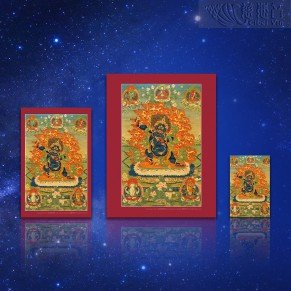
Mahakala Deity Thangka-Set
Bestows health and wealth, wards off misfortune and evil. Bring protection everywhere.
Mahakala Deity is the god of the void, symbolizing the boundless and infinite universe, dispelling all darkness and demons. He is a central Dharma guardian of Tantric Buddhism, as well as the god of healing and the god of wealth. Mahakala Deity's vastness and power surpasses the six cycles of reincarnation; he can help sincere disciples to quickly and effectively cut off greed, anger, ignorance, arrogance, and doubt.
Wrathful manifestations of Buddhas and Bodhisattvas, such as Mahakala Deity, have powerful energy to avoid evil, eliminate disasters, and dispel evil spirits. Offering to Mahakala can help us develop a fearless mind, increase energy and courage, and calmly face the ups and downs of life; Mahakala can also help us quickly break through obstacles in life, career, health, and practice. May you be blessed with wisdom, great wealth, courage, diligence, achieve greatness, and quickly reach the other shore of enlightenment."Material: PVC laminated card
Dimensions (W*H): Three sizes: 15x19.7cm, 9.7x15cm, 5.5x8.5cm(±3%)
Contents include: Mahākāla Deity Thangka - 5 small, 2 medium, 1 large
【Live excerpt Who's Plaguing You?】
Learn MoreUS $21 -

Natural Agate Medicine Buddha Beads silver earrings - A (red beads)
Material: Agate
Size: 8mm (±3%)
Dzi Beads are the treasures from heaven, containing Universal spiritual essence and magnetic energy.
These Dzi Beads are natural minerals and the patterns may vary. Each one of them is second to none. Only bid if you truly acknowledge and accept such differences.
Learn MoreUS $68 -
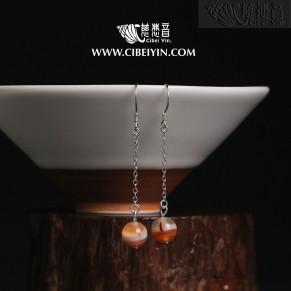
Natural Agate Medicine Buddha Bead silver earrings - 3 (long chain)
Material: Agate
Size: 8mm (±3%)
Dzi Beads are the treasures from heaven, containing Universal spiritual essence and magnetic energy.
These Dzi Beads are natural minerals and the patterns may vary. Each one of them is second to none. Only bid if you truly acknowledge and accept such differences.
Learn MoreUS $68 -

Natural Agate Heavenly Eyes Bead Silver Earring - 4 (Long Chain)
Material: Agate
Size: 8mm (±3%)
Dzi Beads are the treasures from heaven, containing Universal spiritual essence and magnetic energy.
These Dzi Beads are natural minerals and the patterns may vary. Each one of them is second to none. Only bid if you truly acknowledge and accept such differences.
【Live excerpt 2022 Eliminate Disasters & Increase Longevity Chanting Class (Day 1) 】
Learn MoreUS $88 -

Dzi Bead Golden Silk Jade Bracelet
Material: Agate
Specifications: Dzi bead 20 mm, matching beads 8 mm (±3%)
This Dzi bead, blessed with the compassionate empowerment of Grandmaster JinBodhi, carries auspicious and sacred spiritual energy as well as the power to ward off evil. It can calm the mind, protect the heart, dispel misfortune, and bless the wearer with peace, good health, and auspiciousness.
The color, pattern of each dzi bead is slightly different and may differ from photos above. Random selection for shipment.
Totems: double lines, two eyes, heaven and earth, three-eyed tiger teeth, double tiger teeth, treasure bottle...etc.
Learn MoreUS $58 -

Dzi bead and agate bracelet
Material: Agate
Specifications: Dzi bead 16x10mm, agate bead 8mm
This Dzi bead, blessed with the compassionate empowerment of Grandmaster JinBodhi, carries auspicious and sacred spiritual energy as well as the power to ward off evil. It can calm the mind, protect the heart, dispel misfortune, and bless the wearer with peace, good health, and auspiciousness.
The color, pattern of each dzi bead is slightly different and may differ from photos above. Random selection for shipment.
Totems: One-line, Two-line, Two-eye, Heaven and Earth, Three-eyed Tiger Fang, Double Tiger Fang, God of Wealth, Aquarius, Green Tara, etc.
Learn MoreUS $60 -

Agate Dzi Bead 57mm
Dzi Beads are the treasures from heaven, containing Universal spiritual essence and magnetic energy.
Size: 5.7x1.39x1.42 cm(±5%)
Learn More -
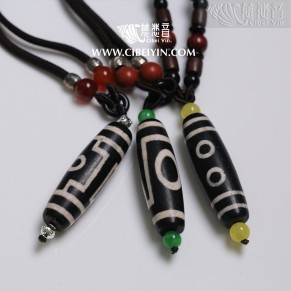
Agate Dzi Bead 42mm
Dzi Beads are the treasures from heaven, containing Universal spiritual essence and magnetic energy.
Unique, precious and rare!
Size: 4.2x1.35x1.35 cm(±5%)
Learn More